
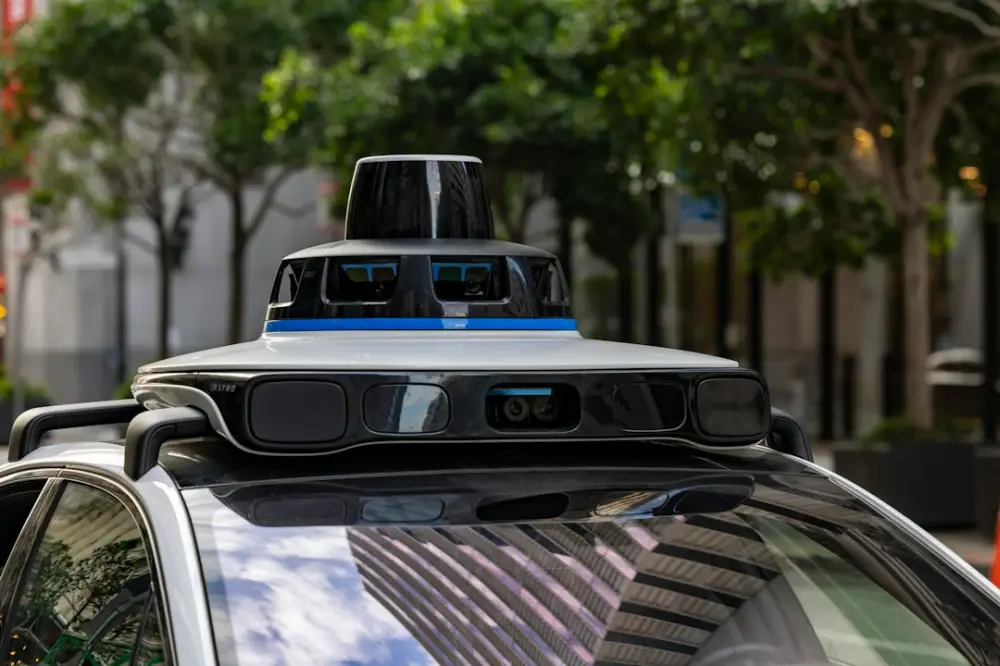
Sensor integration in mobility platforms is the process of combining diverse hardware—such as accelerometers, LiDAR, and cameras—into a unified system to monitor vehicle health, environment, and passenger safety. By fusing data from multiple sources, these platforms provide real-time insights that improve navigation, structural maintenance, and overall transportation efficiency across automotive and rail networks.
In practice, this involves moving away from isolated components that operate in silos toward a centralized architecture. When a vehicle can cross-reference the data from a MEMS-based IMU with visual input from a camera, it gains a more reliable understanding of its position and state than any single sensor could provide on its own.
How Multi-Sensor Fusion Powers Modern Transport
Multi-sensor fusion is the computational layer that makes sense of raw hardware inputs. Instead of a vehicle reacting to a single radar blip, fusion algorithms weigh inputs from ultrasonic sensors, long-range radar, and high-resolution cameras simultaneously. This redundancy is critical for safety; if a camera is blinded by direct sunlight, the radar can still detect the physical presence of an obstacle, ensuring that scalable sensor solutions are essential for maintaining operational uptime in adverse conditions.
A concrete example of this is found in Advanced Driver Assistance Systems (ADAS). When a car performs an emergency lane-keep maneuver, it isn't just "seeing" the lines on the road. It is processing wheel-speed data, steering angle sensors, and lateral acceleration to ensure the maneuver doesn't exceed the physical grip limits of the tires. This level of coordination requires a high-speed data bus capable of handling massive throughput with minimal latency.
Precision Sensors for Structural Health and Railway Safety
Beyond passenger cars, sensor integration plays a votal role in heavy infrastructure and rail. High-precision instruments, such as the ASC QBA series of quartz beam accelerometers, are used to monitor the structural integrity of bridges and rail tracks. These sensors detect minute vibrations and seismic shifts that might indicate a developing crack or a shift in the track geometry before it becomes a catastrophic failure.
In the rail sector, integrating these sensors into the bogies of a train allows for predictive maintenance. By analyzing the vibration signatures of the wheels and bearings in real-time, operators can identify wear patterns that deviate from the norm. This shift from scheduled maintenance to condition-based maintenance reduces downtime and prevents the “flat spot” wheel issues that often lead to expensive track damage.
Smarter Mobility Through Digital and IoT Solutions
The transition to smart mobility is driven by the Internet of Things (IoT), where sensors do more than just inform the vehicle—they inform the network. For fleet managers, engineering coherent mobility platforms means connecting local vehicle data to a cloud-based dashboard. This allows for the monitoring of fuel efficiency, driver behavior, and cargo environment (such as temperature and humidity) across thousands of units.
Consider a logistics fleet operating in 2026. Each truck acts as a mobile data node. If a sensor detects a sudden dip in tire pressure or an unusual engine temperature spike, the system automatically flags the vehicle for a service check at the next hub. This digital integration ensures that the movement of goods is never stalled by predictable mechanical failures, optimizing the entire supply chain through constant data streams.
Innovations Shaping the Future of People and Goods
Innovation in sensor technology is currently moving toward miniaturization and increased ruggedization. New solid-state LiDAR systems, for instance, remove the need for spinning mechanical parts, making them more durable for the high-vibration environments of last-mile delivery robots and autonomous shuttles. These innovations allow for 360-degree environmental awareness in compact form factors that were previously impossible.
In the freight sector, automated yard trucks are utilizing integrated sensor stacks to navigate complex warehouse environments. These vehicles combine GPS with high-frequency radar to move containers with centimeter-level precision. By removing the variability of human error in these high-repetition environments, facilities can operate 24/7 with a significantly lower risk of workplace accidents.
First Steps for Deploying Integrated Mobility Sensors
- Start by auditing your existing hardware ecosystem to identify isolated data silos that currently hinder real-time communication between subsystems.
- The first step in hardware selection is to prioritize sensors with high ruggedization ratings to ensure they can withstand the constant vibration of automotive and rail environments.
- To begin the integration process, define a centralized architecture that allows for synchronized data timestamps across all sensor inputs.
- Next, establish a high-speed communication protocol, such as Automotive Ethernet, to manage the massive data throughput required for fusion algorithms.
- Then, conduct a baseline calibration in a controlled environment to ensure the software's digital twin accurately reflects the physical state of the platform.
Enhancing the In-Cabin Experience via Integrated Sensors
The focus of mobility is shifting from purely external navigation to the internal well-being of the passengers. Integrated in-cabin sensors, such as infrared cameras and pressure mats, are now used to monitor driver fatigue and passenger occupancy. If a driver’s blink rate or head position suggests drowsiness, the system can trigger an alert or transition the vehicle into a safer autonomous mode.
These systems also play a role in climate control and airbag deployment. By sensing the exact weight and position of a passenger, the vehicle can tailor the force of an airbag deployment to minimize injury. For Caaresys, these developments are central to the goal of building intelligent mobility systems that prioritize human safety. By focusing on scalable sensor stacks and the precision of automotive sensing, Caaresys helps bridge the gap between complex hardware and the trust required for widespread AI-powered automation. The future of mobility depends on this seamless integration—where every sensor contributes to a safer, more predictable journey.