
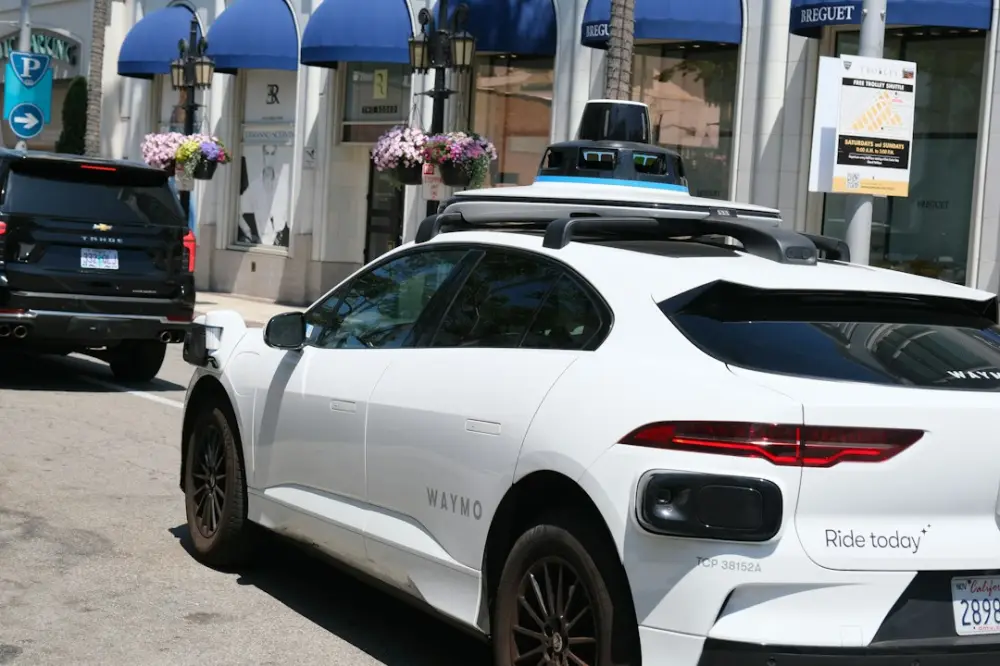
Engineering coherent mobility platforms involves designing unified architectures where vehicle hardware, software, and data streams function as a single synchronized entity. By consolidating fragmented electronic control units into centralized or zonal compute clusters, engineers enable real-time data sharing across sensors and actuators. This integration ensures that safety, navigation, and energy management systems operate from a single source of truth.
A primary challenge involves managing immense data throughput from 4D imaging radar and LiDAR without latency. Engineers must balance high-performance compute requirements with power constraints, ensuring that sensor fusion occurs at the edge. This coordination is vital for maintaining safety-critical response times in autonomous fleets and dense urban environments.
Defining Coherent Mobility Platforms
A coherent mobility platform is characterized by its ability to maintain a "single source of truth" across all onboard and offboard systems. In traditional automotive design, the infotainment system might have no awareness of the battery's thermal state, and the advanced driver-assistance systems (ADAS) might operate on a completely different processing loop than the cabin sensors. Coherence breaks these barriers by utilizing a centralized or zonal controller that aggregates data from every sensor and actuator.
Consider a modern logistics hub operating a fleet of autonomous yard trucks. In a fragmented system, each truck operates based only on its local sensor data, often leading to "stop-and-go" inefficiencies when encountering other vehicles. In a coherent platform, the trucks, the warehouse management software, and the ground-level perimeter cameras share a synchronized data layer. This allows for predictive path planning where a vehicle adjusts its speed 500 meters before a potential conflict, rather than reacting abruptly to a sensor trigger. This level of synchronization requires a robust practical guide to implementing advanced tech to ensure that latency does not compromise safety.
Core Components of Integrated Mobility Systems
Building these platforms requires a specific stack of technologies that go beyond simple GPS and cruise control. The foundation is the sensor stack, which in 2026 typically includes 4D imaging radar, solid-state LiDAR, and high-resolution optical cameras. These sensors do not just provide raw data; they feed into a perception engine that performs sensor fusion at the edge, creating a 360-degree high-fidelity map of the environment in real-time.
- Unified Compute Fabric: Rather than having dozens of Electronic Control Units (ECUs), coherent platforms use high-performance compute clusters. For example, a single liquid-cooled compute node might handle both the path planning for autonomy and the AI-driven energy management for the powertrain.
- Automotive Ethernet: To move the terabytes of data generated by modern sensor stacks, traditional CAN bus systems are being replaced by high-speed Automotive Ethernet. This allows for the high-bandwidth, low-latency communication necessary for real-time safety functions.
- V2X Communication: Vehicle-to-Everything (V2X) modules allow the platform to communicate with smart city infrastructure, such as traffic lights in a municipal test bed or tolling systems on a smart highway.
An example of this integration can be seen in modern electric bus fleets. These vehicles use their integrated platforms to balance the power draw of the drivetrain with the climate control system based on real-time passenger load data. If sensors detect the bus is at 90% capacity, the platform preemptively increases cooling while adjusting the torque profile to maintain energy efficiency targets.
Engineering Challenges in Modern Transportation
The primary hurdle in engineering these systems is managing the "validation gap." As mobility platforms become more complex and software-defined, traditional testing methods—like driving millions of physical miles—are no longer sufficient or cost-effective. Engineers must rely on high-fidelity simulation environments that can replicate edge cases, such as a sensor being blinded by a specific frequency of sunset glare or a V2X signal being dropped in a tunnel.
Data orchestration presents another significant challenge. A single autonomous vehicle can generate up to 4 terabytes of data per day. Deciding what data stays on the edge (processed locally for immediate action) and what data is sent to the cloud (for fleet-wide learning) is a constant balancing act. For instance, a delivery drone platform must process obstacle avoidance locally to prevent crashes but upload battery degradation telemetry to the cloud to optimize maintenance schedules across the entire fleet. This intelligent mobility technology is redefining modern logistics by turning every vehicle into a data-gathering node that improves the performance of the entire network.
Evolution of Mobility Research: 2023–2026
The journey toward coherent platforms has moved rapidly over the last few years. In 2023, the industry's focus was largely on refining Level 2+ autonomy—systems that could handle highway driving but required constant human supervision. Research at that time was heavily siloed, with software teams and hardware engineers often working on different release cycles.
By 2024, the shift toward Zonal Architecture began in earnest. Major manufacturers started moving away from the "one function, one ECU" model, which significantly reduced the weight and complexity of vehicle wiring harnesses. This was a pivotal moment for electric vehicles, as the weight savings directly translated into increased range. In 2025, we saw the widespread adoption of Generative AI for predictive maintenance. Instead of waiting for a part to fail, mobility platforms began using vibration and thermal data to predict a component's end-of-life with 98% accuracy.
Now, in 2026, the focus has shifted to "Coherent Fusion." We are no longer just connecting parts; we are creating systems that are context-aware. A vehicle today doesn't just see a pedestrian; it understands the intent of the movement based on historical data and environmental context, adjusting its behavior before the pedestrian even steps off the curb. This evolution reflects a move from reactive safety to proactive intelligence.
First steps for coherent mobility platforms
Align one user journey across modes before you integrate every vendor API.
- First step: map pickup, payment, and handoff points on a single corridor.
- Start by defining shared identifiers for trips, vehicles, and riders.
- To begin testing, run shadow trips that log data without affecting riders.
- Follow these steps to review latency and failure modes at each hop.
- Publish a short playbook so operators know who owns each escalation.
Future Trends in Human-Centric Mobility Design
As we look toward the next phase of engineering, the focus is shifting back to the human experience within the machine. Coherent mobility platforms are increasingly incorporating interior sensing technologies that monitor occupant well-being. This is not just for comfort, but for safety. For example, if a platform detects that a driver is experiencing a medical emergency or extreme fatigue, it can autonomously transition to a safe-stop mode or navigate to the nearest hospital.
Human-centric design also means simplifying the hand-off between automated and manual control. Engineering a system that can provide a seamless transition requires the platform to be aware of the driver's cognitive load. If the vehicle is navigating a complex construction zone in a city like Chicago, the platform might choose to delay a non-essential notification to avoid distracting the operator. This level of situational awareness is what separates a basic automated vehicle from a truly coherent mobility system.
At Caaresys, we focus on the intersections of these technologies—where sensor data meets human trust. Engineering coherent mobility platforms is the path forward for those who value precision over hype. By understanding the hardware requirements and the software logic that binds them, we can build systems that are not only smarter but more resilient. This site remains dedicated to exploring the technical realities of these systems, ensuring that the next generation of mobility is built on a foundation of integrated, reliable engineering.